
“Israel has played two games at once”, the Western diplomat told us. “They have deliberately constrained their attack in some senses. They have tried to minimise civilian casualties – a few hundred Iranian civilians are dead, not thousands. They have attacked Iranian domestic energy facilities – to limit the jump in the oil price which was bound to follow their attack. On the other hand, they have killed the head of the Iranian army and the head of the IRGC [the Iranian Revolutionary Guard Corps] and they knew that Iran has no choice, they have to respond to such public humiliation.”
“Israel is dreaming if they think that Netanyahu can stand up and with a straight face call for regime change in Tehran”, a Middle Eastern analyst told us. “The Iranians would have overthrown their regime if they could have in 2022 during the Mahsa Amini protests, or any of the half dozen protests there have been in the last two decades. A call by Benjamin Netanyahu and Israeli attacks which have killed hundreds aren’t going to magically make any difference this time around. This attack is a desperate throw of the dice by Bibi [Netanyahu]. His government was nearly kicked out of power last week by the Ultra-Orthodox when they threatened him that drafting the haredim [Ultra-Orthodox men] would have brought down his coalition government. If Bibi is out, people outside Israel forget that he’s back in court for the corruption charges which haven’t gone away and he’s probably in jail for corruption in the next year. This isn’t about regime change in Iran, it’s about preventing regime change in Israel.”
“Who’s talking about the Palestinians now?” the Western diplomat asked rhetorically. “In the last three days the Israeli army has killed nearly a hundred Palestinian civilians waiting to receive food. There’s a near-famine in Gaza. The conversation about recognition of a Palestinian state, serious condemnation of Israeli actions in Gaza, people beginning to use the term ‘genocide’ will all become harder – because how can you criticise Israel during a war with Iran? So why did Israel attack Iran now? There was a diplomatic process in place that was progressing and even the Republicans [in the US] were saying publicly that there was no evidence of Iran pushing ahead with development of their nuclear capability, so why now? We are dealing with a very cynical politician [Netanyahu], a survivor in a very rough political neighbourhood.”
The US was clearly aware that Israel was going to strike Iran well before the attack took place. There was an evacuation of non-essential personnel from US Embassies in Iraq, Bahrain and Kuwait and reports of non-essentials and military dependents being evacuated from the United Arab Emirates and Qatar. The USS Thomas Hudner, USS Bulkeley and USS Cole were all in the Eastern Mediterranean and pre-positioned to intercept Iranian missiles which they have done since the first round of Iranian retaliatory attacks. There are unconfirmed reports of the movement of supplies for Patriot and THAAD missile systems to Israel prior to the Israeli attack on Iran. This morning, 28 US refuelling aircraft left the United States heading across the Atlantic.
It is notable that the Kingdom of Saudi Arabia, the UAE, Bahrain and Qatar all condemned Israel’s attack. “They have a lot to lose and nothing to gain from a regional war. There may be a rise in the oil price, but they will probably be blocked from exporting by Iranian naval action in the Straits of Hormuz,” a think tanker told Field, “but if the Iranians do block the Straits then they know this becomes a much bigger conflict as the West then gets involved to keep oil flowing into the global economy.”
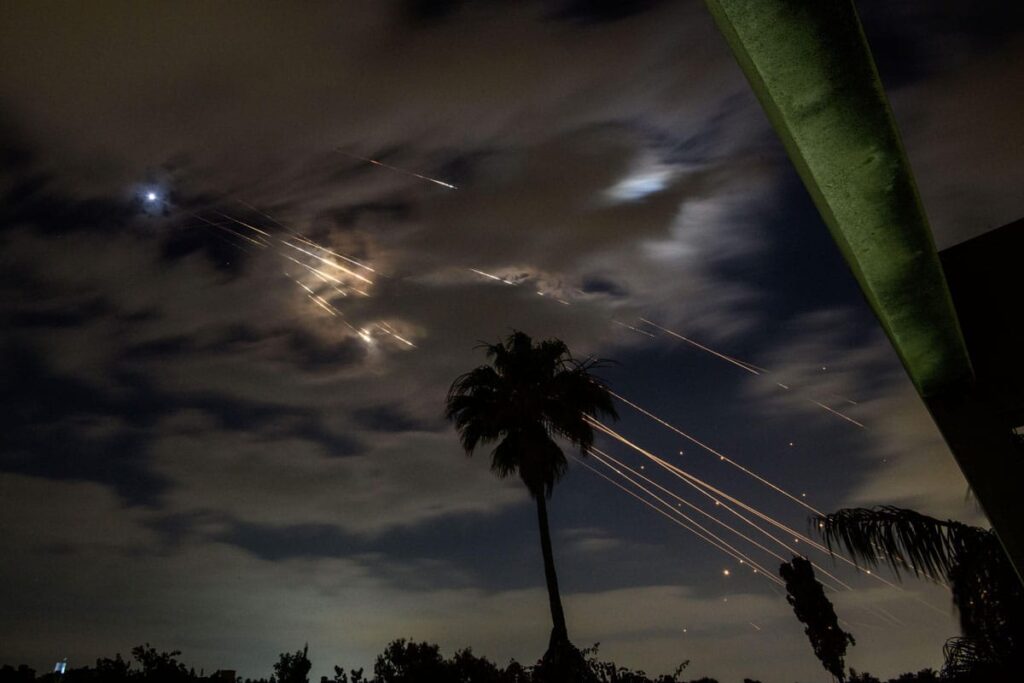
“What happens next?” they continued, “Well, the Iranians are using their good ballistic missiles now. The Israelis don’t want it on TV, but the Iranians were very clear that they were getting rid of old stock in last year’s rounds of attacks with Israel, but this is completely different. If you see the social media clips, Israel is getting hit, a lot of missiles are getting through their missile defence and they are fortunate that casualties have been low because people are in bunkers. The longer this goes on, the fewer people will go to bunkers and the more visible Iranian damage to Israeli towns is, the sooner Israelis will kick out Netanyahu. So, the Iranians will carry on bombing Israel as long as they can, which they have said is for as long as Israel attacks them.”
“The Iranians are unlikely to hit Western targets in the Gulf”, a Western security source told Field. “They don’t want the might of the US military weighing in on Israel’s side. And frankly, I can’t see the MAGA crowd enthusiastically spending billions of dollars, and it will be billions, on missiles to protect Israel from a war that Israel chose to start. If Starmer starts lending the RAF to support Israel, I can’t see that going well domestically, not in this Gaza context and certainly not in his party, so I wouldn’t rule it out, but there would be massive political blowback for him.”
“Look, there is a view in Israel that this needs to be done,” an Israeli journalist told us. “After 7 October, Israelis don’t want to be surprised again. And we have had serious success, Nasrallah is dead, Hizbullah is badly wounded, Assad is out and Syria is no longer an Iranian base, and even people [Israelis] who want Gaza over and the hostages back are a little sympathetic that now is the time to show Iran once and for all that they will pay a very high price if they ever attack us.”
Another Israeli source told Field, “Netanyahu wants a legacy. And he will have a high threshold for Israeli casualties. So he may well let this war run. It then goes two ways. Either someone says enough, and there’s a settlement. Or Netanyahu himself becomes the way out, and as domestic pressure mounts he is sacrificed as the scapegoat. So Netanyahu goes down in history either way, as the new Samson who vanquished Israel’s enemies, or the villain who gambled with Israeli lives and ended up in prison. Right now it could go either way.”